-
Written By
Sachin Prajapati -
Updated on
June 5th, 2026 -
Read Time
9 minutes
Complete Guide to Migrate Google Workspace to Microsoft 365 Account [2026]
User Query:- My company is planning to switch to a Microsoft environment from Google Workspace, with over 320 mailboxes and large amounts of data spread across multiple services that need to be transferred. Is there any safe way to do this without any data loss?
Summary: Google Workspace and Microsoft 365 are both enterprise-grade platforms, but they do not share a native migration path. Emails, contacts, calendars, and Drive data all need moving, and none of it transfers automatically. IT teams attempting manual migration hit permission errors, incomplete syncs, and broken folder structure before the process is halfway done. To migrate Google Workspace to Microsoft 365 accurately and at scale, this blog covers one manual method and the MCD Google Workspace Backup Tool as the direct and complete solution.
Pre-Migration Checklist
Before you start the G Suite to Office 365 migration, hit these checkboxes so the migration doesn’t stall:
- Your Office 365 tenant accounts are active, and the domain is verified.
- Exchange Online licenses are assigned to the right users.
- Created users sync correctly with Azure AD.
- APIs are enabled in Google Workspace, and admin access is provided.
- Migration scope and data are predefined (no last-minute surprises).
- Storage limits in O365 are checked, and admin access is granted.
How do I migrate Google Workspace emails, contacts, and calendars to Microsoft 365 without losing data?
IMAP sync moves emails but leaves contacts, calendars, and Drive data stuck in Google Workspace entirely. Google Workspace to M365 Migration Tool reads Google Workspace directly and pushes emails, contacts, calendars, and Drive data into Microsoft 365 in one run. Folder hierarchy lands correctly, and bulk accounts process together without repeating any step.
How Do You Migrate Google Workspace to Office 365 Manually?
Manual migration between Google Workspace and Microsoft 365 is possible, but it only works smoothly when each phase is handled in the right order. Most issues don’t come from the migration itself; they come from setup mistakes made earlier. So, we’ll go step by step, just like it’s done in real projects.
Part 1: Check Domain Ownership and User Accounts
- Sign in to the M365 Admin Center, go to Setup, then pick Domains.
- Add your Google Workspace domain and the TXT record Microsoft gives you to your domain settings.
- After that, wait for DNS to propagate, then confirm verification shows success.
- Moving ahead, head to Users → Active Users.
- Add or bulk-import all your Google Workspace users.
- At last, assign each user a proper M365 license that includes Exchange Online.
Part 2: Let Google Workspace Share Data
- At first, log in to the Google Cloud Console as a super admin.
- Further, open your Google Cloud Project and then turn on API Scopes for mail, contacts, and drive.
- After that, create a service account and then enable domain–wide delegation for it.
- In the Google Admin Console, add the service account email, client ID, and the OAuth scopes.
- Lastly, wait until Google confirms mailbox access is granted and ready.
Part 3: Migrate from Google Workspace to Office 365
This is the core step: you’ll create endpoints, a CSV list, a migration batch, and run it.
- In the Microsoft Exchange Admin Center (EAC), click on the Migration option.
- Choose Add Migration Endpoint, then pick Google Workspace.
- After that, upload the P12 or JSON key you generated earlier, then finish endpoint creation.
- Moving ahead, create a CSV file with all user email addresses for the migration batch.
- Further, back in Migration (EAC), tap on Create Migration Batch.
- Give it a clear name, and select Migration to Exchange Online as the path.
- Upload your CSV, then configure any filters you need.
- Tap on Save and then click Start Migration to begin the transfer.
- Watch progress in the Migration Dashboard of EAC.
- When done, update your DNS MX records, then delete the migration batch.
Manual migration is possible, but the setup is not always easy. Each step needs to be checked carefully, as missing even one setting can stop the migration. Many businesses choose easier ways for Google Workspace to Office 365 migration and save time.
Why Some IT Teams Avoid the Manual Route?
For a small team, the process is usually manageable. The workload grows as more accounts are added. We have covered some limitations below that come along with the manual approach
- User setup must be completed before migration begins.
- API settings need to be checked more than once.
- One incorrect value in a CSV file can create problems.
- Mailboxes do not always move at the same speed.
- Testing migrated data adds another round of work.
- Larger projects become harder to track over time.
Expert Way To Migrate Google Workspace to Microsoft 365
When the manual setup drags on, a specifically designed tool cuts the hassle and manual workload. MigrateCloudData Google Workspace Backup Wizard helps you to transfer your Google Workspace data to Office 365 with complete data safety.
The software supports the migration of emails, contacts, drive data, and other data while ensuring zero data loss. You also get filters, bulk account support, and advanced settings for big projects. Along with all that, the tool also helps you to setup Google Workspace email in Outlook easily.
Follow The Procedure For Migrating From Google Workspace To Microsoft 365:
- To start, download and run the Google Workspace Backup software on your system as an administrator.
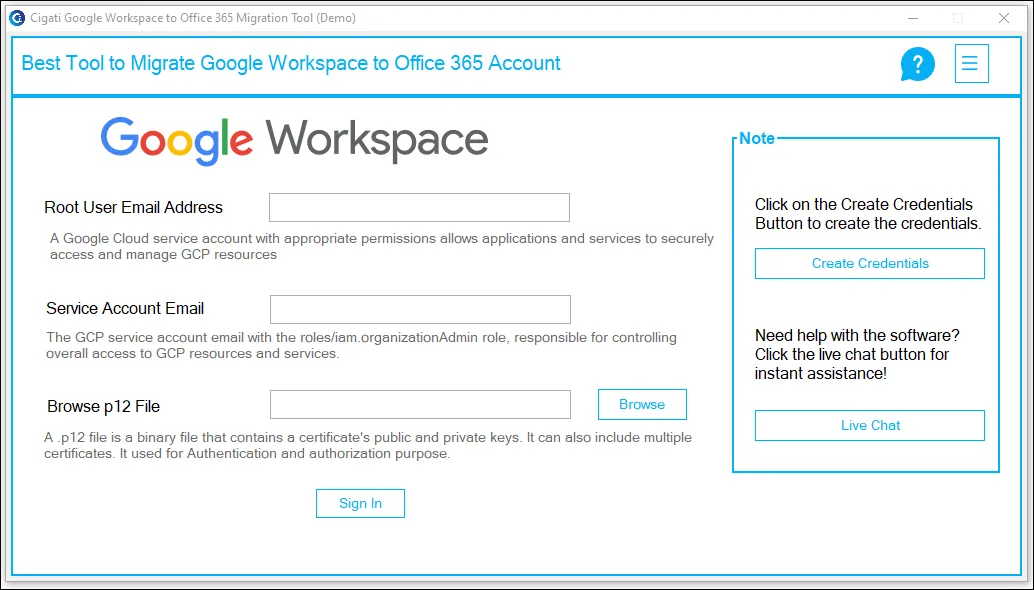
- Further, enter the details on the login panel, such as User Name, Service Account ID, and p12 file, and then click on the Sign In button.
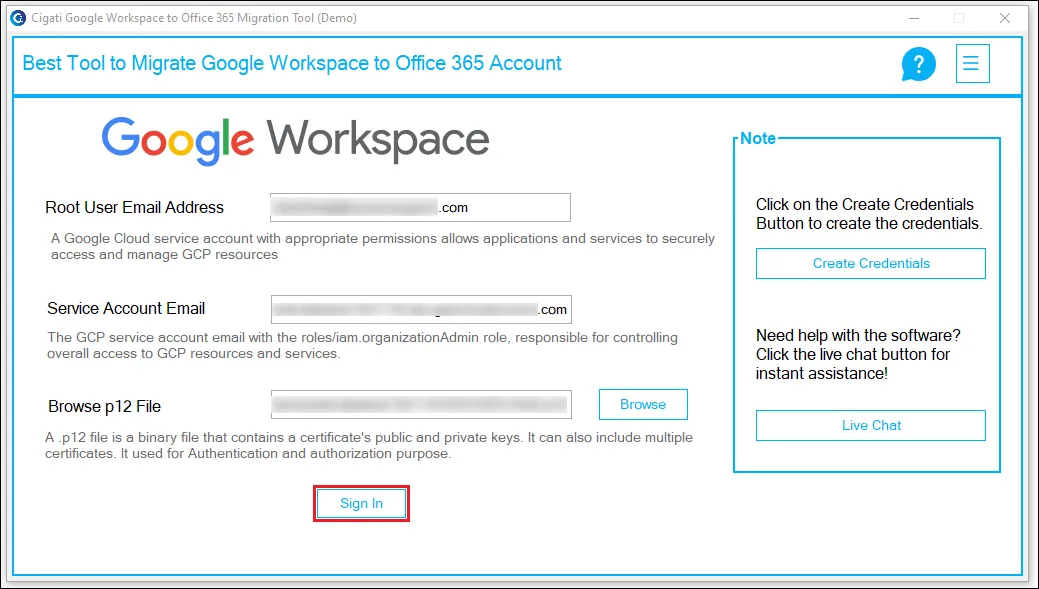
- After that, select the mailboxes you want to move to Office 365 and tap on Next
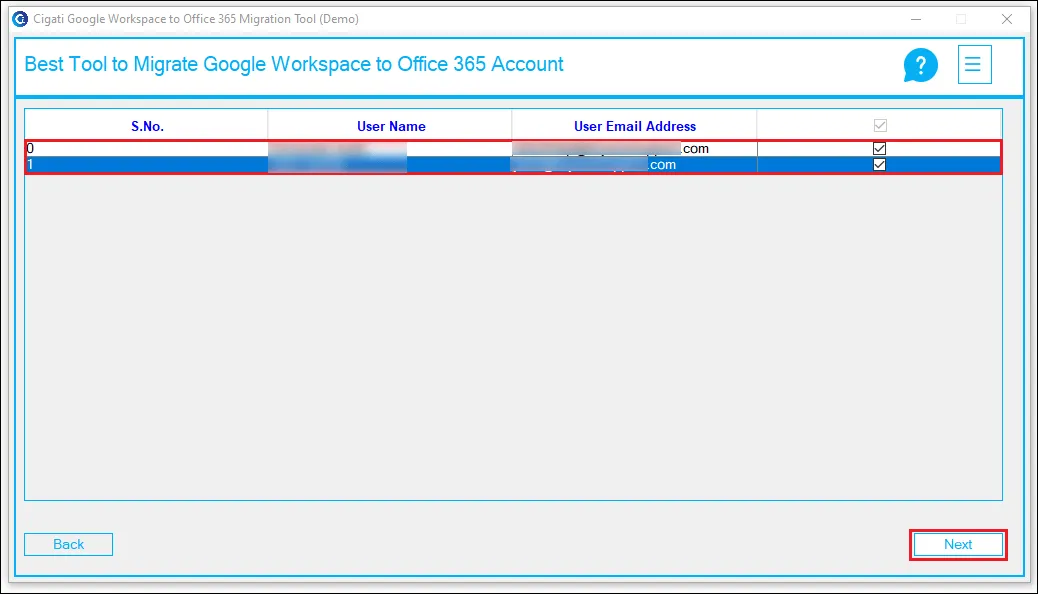
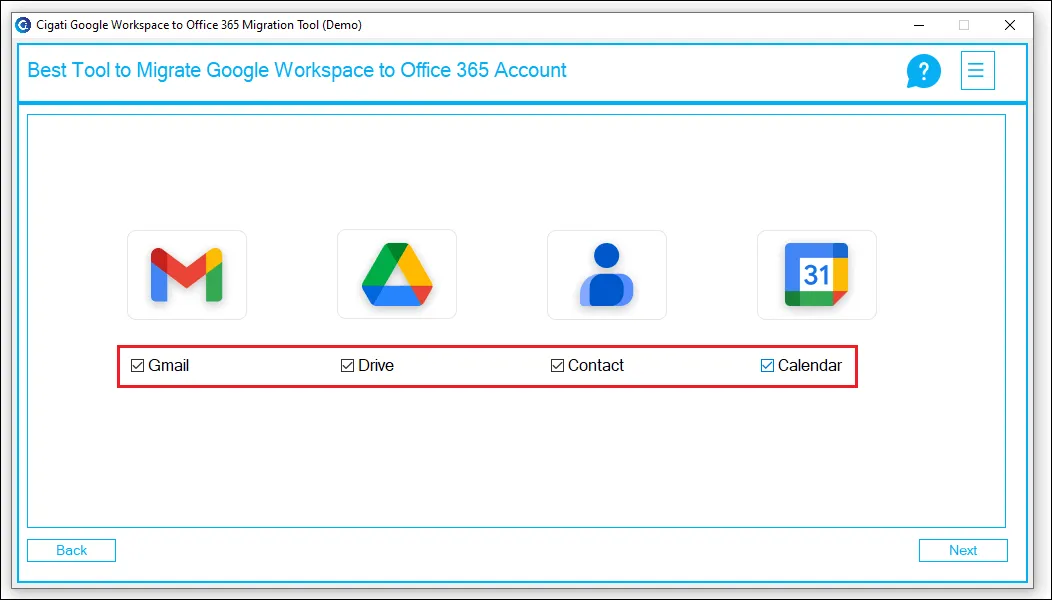
- Moving on to the next screen, you can select all the Google Workspace services you want to migrate.
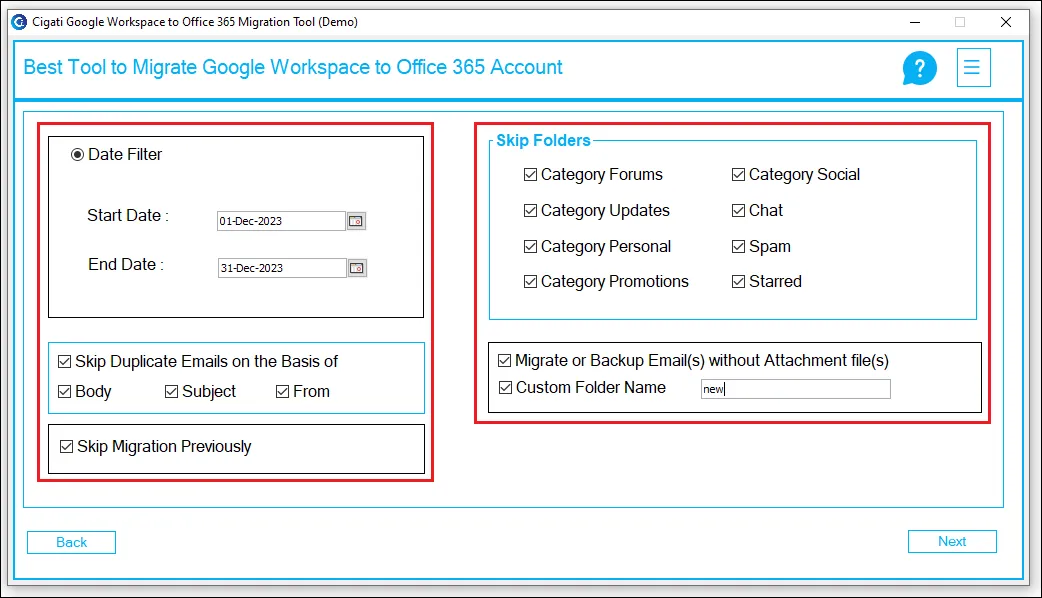
- Select the additional filters that you want to apply for the selective output.
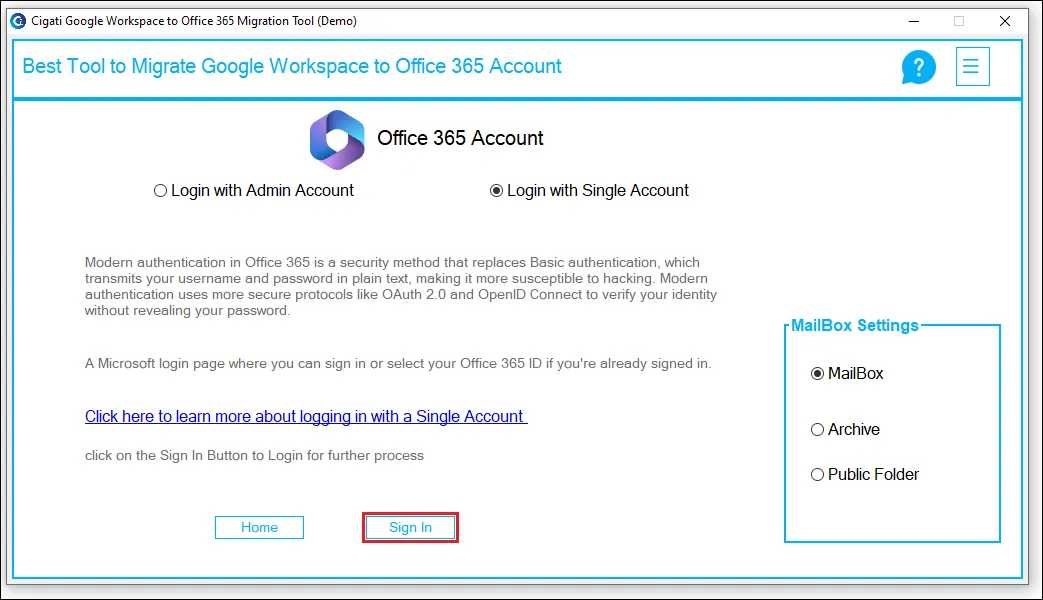
- Next, you can choose to login with a Single Account or an Admin Account, after choosing tap on the Sign In button and proceed further.
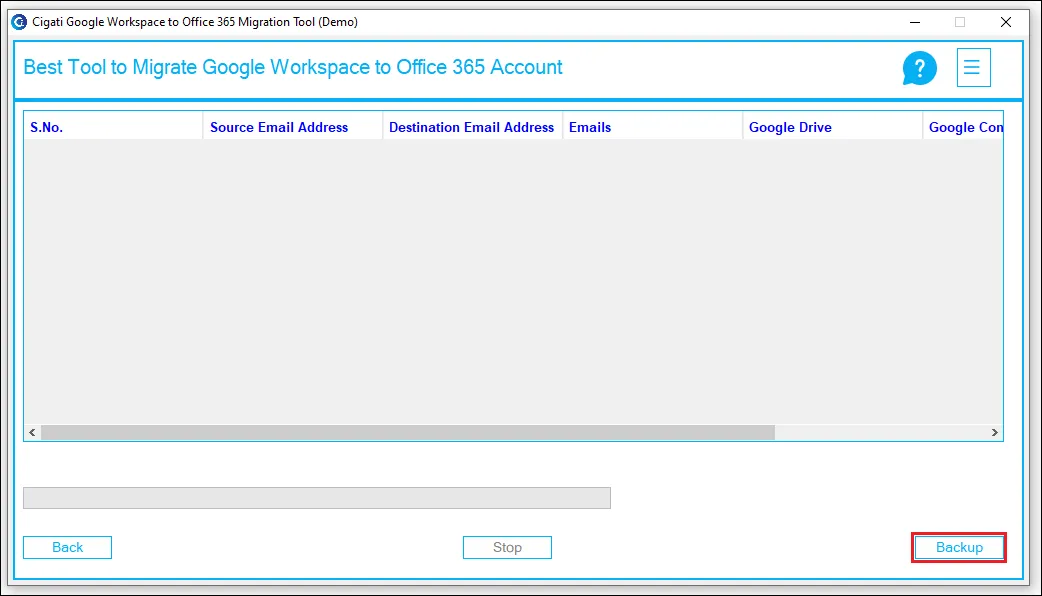
- In the end, click on the Backup button to start the migration process to Office 365.
Why Many Administrators Prefer This Method?
- Emails move directly from Google Workspace to Microsoft 365.
- Attachments stay attached to their original messages.
- Folder structures stay exactly as they were after migration.
- You can process multiple accounts in one project.
- Contacts, calendars, and Drive data are handled from the same screen.
- The software allows you to export Google Workspace emails to PST to open in Outlook.
Case Study
A company from LA needed to move its Google Workspace data to Microsoft 365 for 25 employees. They were heavily reliant on Google Workspace services earlier, so they want to transfer all data without affecting their work environment and the productivity of the team.
Challenges Faced
- Multiple user accounts with multiple Google Workspace services are to be moved.
- The IT team did not want the folder structure problem after the process.
- A few of their employees were working remotely.
- The manual workload to check every mailbox for data loss or other issues was not practical.
Solution Used
They tried to transfer data with a manual approach, just to end up with a bigger headache and a broken folder structure. Later, they tried the MigrateCloudData Google Workspace Backup Tool and successfully moved all their data with minimal downtime. The tool helped them to resume their work quickly and ensured zero data loss with the folder structure preserved. They could also use this software to migrate Google Workspace to Zoho Mail for their indian subsidiary.
Results Achieved
- User accounts were successfully migrated to Microsoft 365.
- Mailbox folders appeared in the same structure after the move.
- Employees continued accessing their work data without major changes.
- The IT team did not need to spend days checking every mailbox.
To Wrap Up
You can migrate Google Workspace to Microsoft 365 in different ways. What works best depends on your migration needs. A manual method is possible, yet it often involves lots of setup and handling migration stuff yourself.
For an easier option, there’s the MigrateCloudData Google Workspace Backup Utility that allows the secure transfer of your data. This tool handles email, contact, calendar, and Drive data transfer while keeping things simple. If you want to migrate without dealing with tons of troubleshooting, it makes the job much less stressful.
Frequently Asked Questions
Q1. Can multiple Google Workspace accounts be migrated simultaneously?
Yes. The MigrateCloudData Google Workspace Backup Tool supports bulk migration, making it easier to transfer multiple user accounts in a single operation. This helps administrators save time and manage large migration projects without creating separate migration batches for every user.
Q2. What data can be migrated from Google Workspace to Microsoft 365?
The software can migrate emails, contacts, calendars, and Google Drive data from Google Workspace to Microsoft 365. This allows organizations to move business communication and collaboration data without relying on multiple migration tools or separate migration workflows.
Q3. Is it possible to migrate Google Workspace emails directly to Microsoft 365?
Yes. The MigrateCloudData Google Workspace to Office 365 Migration Tool provides a direct way to move Gmail emails to Microsoft 365. Users do not need to manually export mailbox data before starting the migration process.
Q4. How can organizations minimize downtime during migration?
Downtime can be reduced by planning the migration, validating user accounts, and migrating data before the final cutover. Using a dedicated Google Workspace Migration Tool also reduces manual tasks that can delay the migration process.
Q5. Will folder structures and labels be preserved during migration?
Yes. The software is designed to maintain the original mailbox hierarchy during migration. This helps users find their emails in familiar folders after moving from Google Workspace to Microsoft 365, reducing confusion after the transition.
Q6. Can shared Google Drive data be migrated to Microsoft 365?
Yes. Along with mailbox data, the MigrateCloudData Google Workspace Backup Software supports Google Drive migration. This allows organizations to transfer important business files and folders to Microsoft 365 as part of the same migration project.
Q7. Can organizations migrate only selected users or departments?
Yes. Administrators can select specific user accounts for migration instead of moving the entire Google Workspace environment at once. This is useful when departments are migrated in phases or during pilot migration projects.
Q8. Are email attachments and metadata preserved?
Yes. The tool migrates email attachments along with mailbox content. Important properties such as sender information, recipient details, timestamps, and subject lines are also maintained during the migration process.
Q9. Is it possible to migrate Google Workspace Groups to Microsoft 365 Groups?
Group migration requirements vary between organizations. While the tool focuses on migrating user mailbox data and related services, administrators should review Microsoft 365 group requirements separately when planning a complete migration project.
About The Author

Related Post


